Indiana & Chicago Area Commercial Roofing

Commercial roofing.
Field to finish.

Paul Cadena · Estimator & Project Manager

I bring 30+ years in commercial roofing, from Local 11 journeyman to estimating, project management, service, and operations leadership. Explore my résumé, completed-project experience, and the work behind an estimate.

30+ yrs
Commercial roofing experience
TPO · EPDM · PVC
Systems estimated
IN · IL
Local opportunities
Moody Bible College Auditorium roofing from Paul Cadena’s professional project portfolio.
Project experience · Moody Bible Chicago, Illinois
01 — Practice
Commercial roofing estimating

Numbers that survive contact with the roof.

A good commercial roofing estimate isn't a spreadsheet exercise — it's a translation. You're taking a stack of architectural drawings, a walk on a hot deck, a tear-off sample, a manufacturer spec, and a crew's real cycle time, and turning all of it into a number a building owner can plan around and a foreman can actually build to.

That's the discipline I bring to estimating and project management. I think about commercial roofs as complete systems: deck, insulation, cover board, membrane, flashings, terminations, drainage, and maintenance. My goal is to coordinate those parts in the estimate, identify open questions, and give the owner and crew a clear plan.

I work primarily on flat and low-slope roofs across Indiana and the Chicago area — distribution, light industrial, retail, multi-tenant, and institutional buildings. The job mix is varied, but the discipline is the same: measure honestly, scope completely, and price what you can defend in front of an owner, an architect, and a roofer at the same table.

/ 01

Quantity takeoffs

Membrane, insulation, cover board, fasteners, flashings, edge metal, drains, walk pad — line by line, with waste factors that match the field.

/ 02

System selection

TPO, EPDM, modified bitumen, and recover vs. tear-off decisions matched to building use, deck, code, and warranty length.

/ 03

Scope & exclusions

Clear scopes that name the system, the manufacturer warranty, the flashing details, and what is intentionally not included.

/ 04

Budget & schedule

Pricing tied to real labor cycle times, current material costs, and a schedule that accounts for weather windows and lead times.

/ 05

Site & condition surveys

Roof walks, core cuts, drainage checks, and photo-documented condition reports that justify the recommendation.

/ 06

Owner-side translation

Plain-English summaries for property managers and owners who need to understand the bid, not just sign it.

Experience & estimating examples

The experience behind a clear scope.

Selected projects from my professional background, plus downloadable EDGE takeoffs, estimate breakdowns, RFI logs, proposals, and a formula-driven workbook. Project photos illustrate my professional experience across prior roles, not contracts awarded to one company.

Specialty ribbed roofing from Paul's portfolioEPDM roof from Paul's portfolioTPO installation from Paul's portfolio
02 — Field Notes
Roofing education & resources

Understand your roof. Plan the right repair.

Practical roofing education for owners, property managers, and crews. Start with leak repairs, flat-roof basics, and the details worth doing right.

Flat-roof decisions start with an inspection.

A lighthearted corgi reminder to start with an inspection, a clear plan, and the details your building needs. The focus is proper workmanship, not shortcuts.

Commercial low-slope roof with roofing work in progress.

A lasting repair starts with finding the leak.

My first question is what is letting water in, not which patch to apply. I want the investigation, the temporary protection, and the final repair clearly documented.

Read the field note

Roof leaks need a proper investigation to verify the water-entry path and repair location; patching without that investigation may not solve the problem. The NRCA library's leak-investigation bulletin explains this approach for low-slope roofs.

I recommend asking the roofer to separate emergency protection from the permanent repair in writing. Ask what was found, what materials and details are proposed, and how the completed work will be checked; NRCA repair training likewise distinguishes temporary and permanent repair procedures.
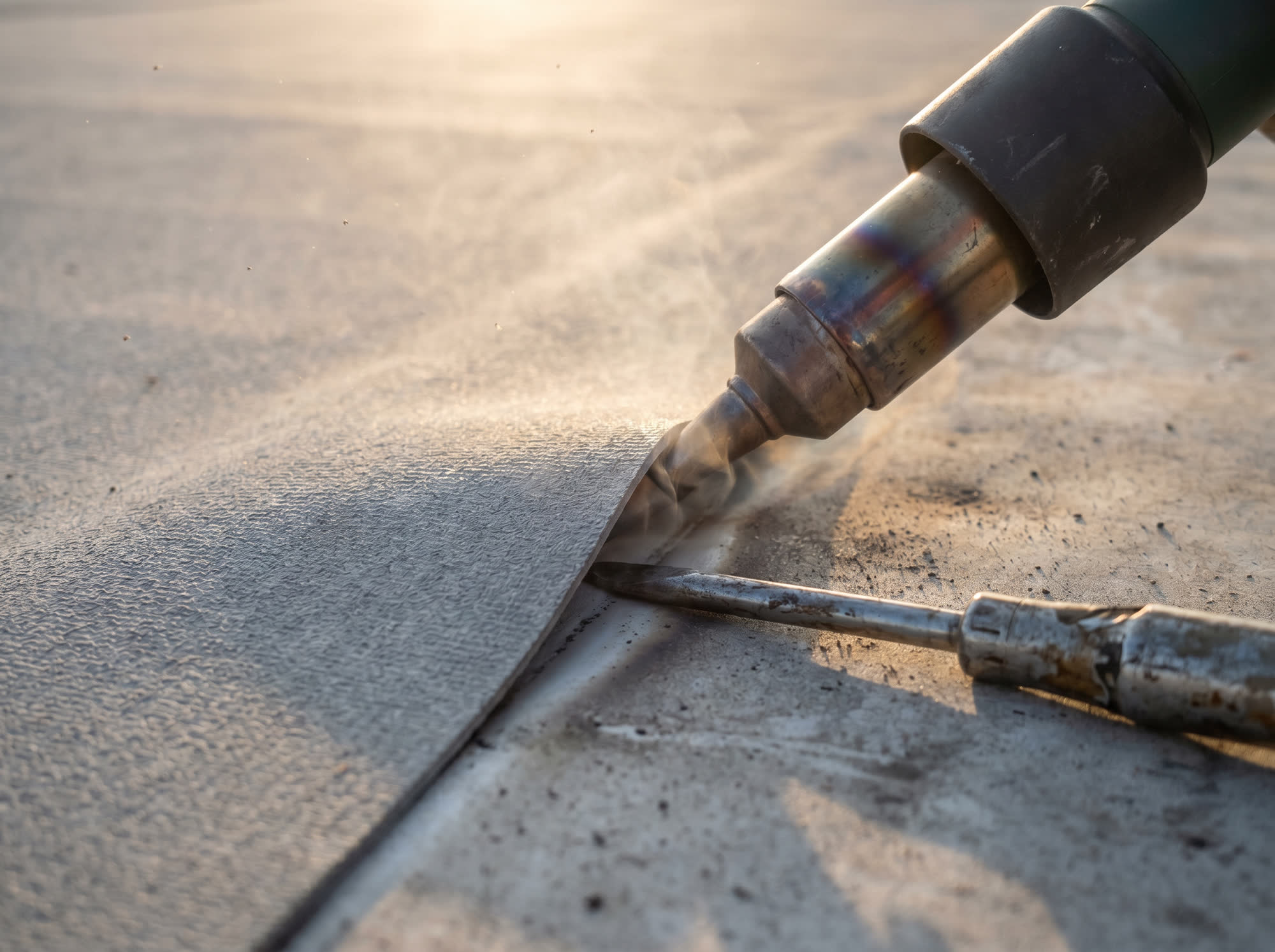
Close-up of a TPO single-ply roofing seam being heat-welded with hot-air welder.

TPO or EPDM: start with the building.

I compare the complete roof assembly, not just the membrane name. My review starts with the building's use, existing conditions, project requirements, and maintenance plan.

Read the field note

Before recommending a system, I want the deck, insulation, drainage, flashings, attachment, and warranty requirements on the same page. I would ask for a written explanation of why the proposed assembly fits this particular building.

For an owner comparing bids, my recommendation is to ask each contractor to identify the proposed manufacturer, assembly, exclusions, and maintenance responsibilities. That makes the decision about the whole scope rather than a product label.

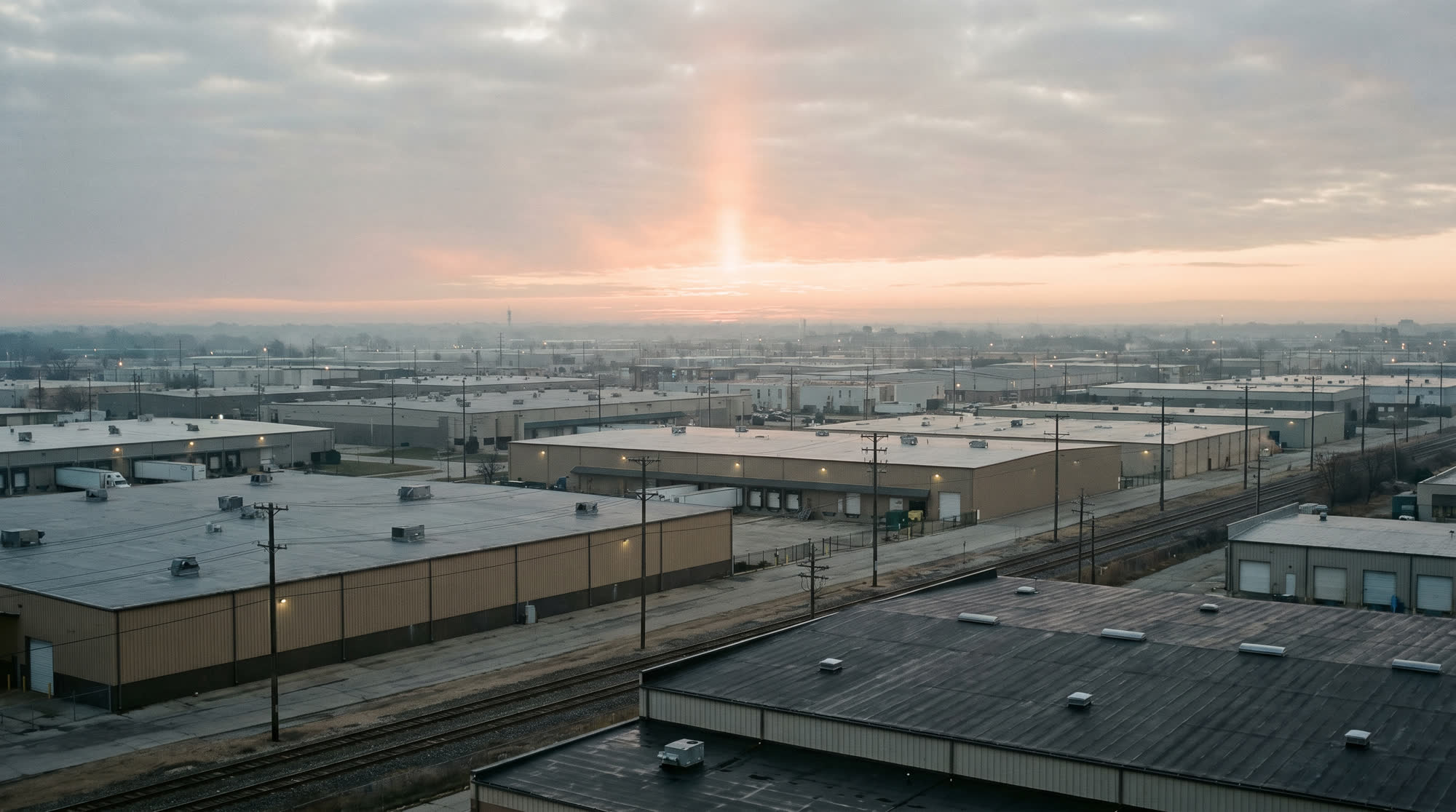
Wide view of low warehouse and distribution buildings with flat roofs at dawn.

How to read a roof condition report.

Look for documented observations, clearly marked locations, and an explanation of what still needs investigation. I want the recommendation tied to the conditions, not just a price.

Read the field note

I look for dated photos, a roof plan showing the areas discussed, and a clear distinction between what was observed and what was tested. If a report does not establish the condition of concealed materials, I want that limitation stated.

My suggested questions are simple: What needs attention now? What can be maintained? What additional investigation is needed before choosing a repair, recover, or replacement?

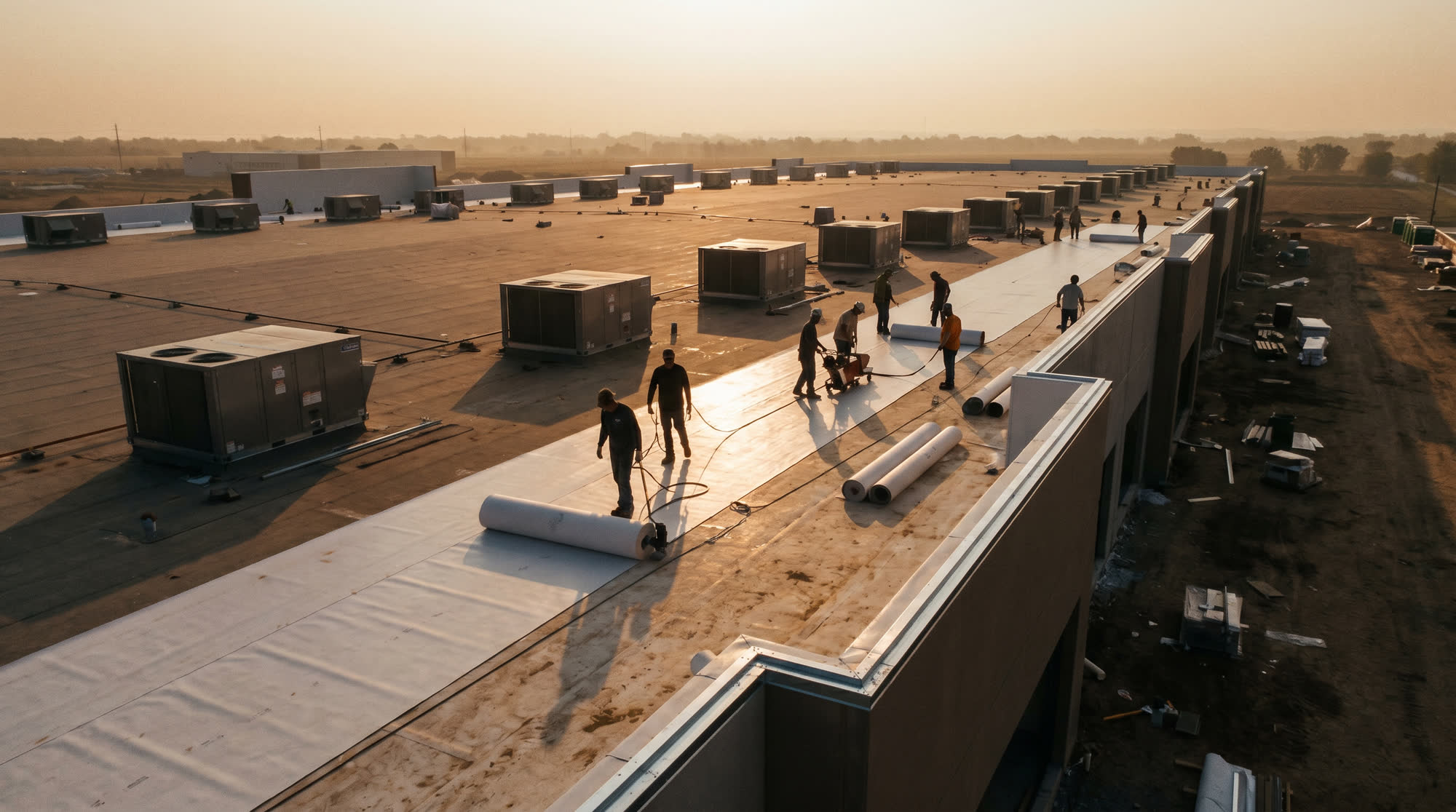
Wide view of crews working on a large commercial flat roof at golden hour.

Recover or tear-off? Evaluate the existing roof first.

I want moisture conditions, deck condition, drainage, code requirements, and warranty goals reviewed before comparing options. My preference is to resolve those questions before treating either option as a firm scope.

Read the field note

A recover evaluation should address deck integrity, load capacity, system compatibility, moisture, drainage, wind uplift, and building-code requirements. The NRCA drainage guidance describes these considerations and the importance of correcting drainage deficiencies.

I recommend asking the project team to explain which conditions support its recommendation and which findings could change the scope. I would keep unknowns visible as investigation items or clearly stated allowances.

Worn wooden clipboard with grid notepad, mechanical pencil, tape measure, and TPO membrane sample.

Why I do not cut corners on the scope.

My approach is to price the details that the crew is expected to build. I want preparation, flashings, drainage, protection, and closeout identified alongside the main roof system.

Read the field note

I recommend asking for a scope that names the proposed assembly, preparation, flashing work, attachment, drainage work, warranty, cleanup, and exclusions. I also want a clear process for documenting concealed conditions before additional work is authorized.

A lower price is not, by itself, evidence of poor work. I compare quantities, materials, details, and responsibilities before deciding whether two proposals cover the same job.

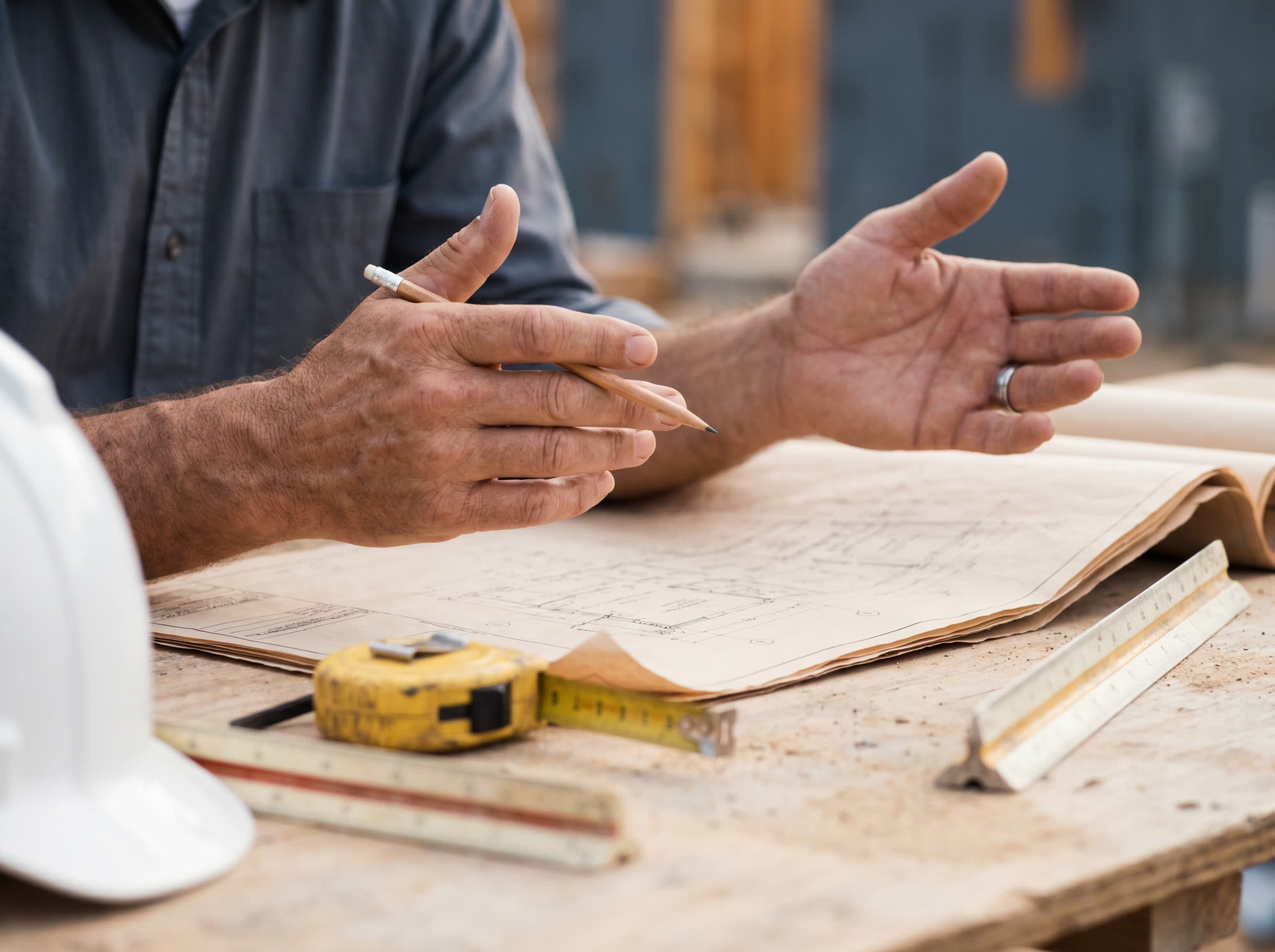
Estimator's hands reviewing architectural blueprints on a job-site table.

What a flat roof is, and why drainage matters.

A “flat” roof is a low-slope roof, not a roof intended to hold standing water. Membrane roof assemblies should be designed for positive drainage, as explained in NRCA's slope and drainage guidance.

Read the field note

Slope can be provided by the structure, tapered insulation, or a combination of methods, with drains and scuppers coordinated to the layout. The NRCA drainage guidance discusses these approaches and the effects of rooftop equipment on drainage paths.

When I review a proposal, I ask where the water is supposed to go and how existing drainage concerns will be addressed. I recommend having the project team review primary and overflow drainage rather than treating the membrane as the whole roof.

03 — Notebook
Roofing & project lessons

Do the basics well. Follow through.

The principles I bring to an estimate and a roof review. Understand the conditions, explain the work, and plan for proper completion.

/ 01

Verify conditions before you price the work.

I use drawings and aerial measurements as starting points, with a safe site assessment by qualified personnel where needed. I want observed conditions, access limitations, and unanswered questions recorded before finalizing the scope.

/ 02

Make the scope clear.

I want the owner and crew working from the same description of the job. My recommendation is to spell out the assembly, details, inclusions, exclusions, and how changes will be reviewed.

/ 03

Plan safe access and enough time.

I want safety planning, site protection, material handling, and realistic production time included before work begins. Those are parts of the job to plan, not corners to cut.

/ 04

Compare the work, not just the total.

I do not judge a proposal by its price difference alone. I recommend comparing quantities, preparation, materials, flashings, drainage, warranty terms, and exclusions, then asking about any differences.

/ 05

Document the condition you found, in writing.

I recommend dated photos and clear locations before, during, and after the work. Keep the findings, approved scope, and completion records together so the next review starts with useful information.

/ 06

Finish with a maintenance plan.

I want closeout to include the applicable warranty documents, maintenance responsibilities, and a clear contact for follow-up. My recommendation is to agree on those expectations before the project is complete.

04 · Beyond work
The ride

A clear mind. A fresh perspective.

A black Harley-style touring motorcycle parked on a rural Indiana road at golden hour.

Sometimes the best way for me to unwind is to get on my Harley and go for a ride. The open road gives me room to clear my mind, step back from the noise, and put things in perspective.

It isn't always about the destination. Sometimes I just need a little time to reflect, appreciate what's around me, and come back with a clearer sense of what matters and where I want to go.

What keeps me moving forward

Persistence is more than a motto.

If you really want to understand the kind of person I am, this is a good place to start. When I first came across the words attributed to Calvin Coolidge below, I recognized something in them that already felt like me.

“Nothing in this world can take the place of persistence. Talent will not: nothing is more common than unsuccessful men with talent. Genius will not; unrewarded genius is almost a proverb. Education will not: the world is full of educated derelicts. Persistence and determination alone are omnipotent.”

I took that message as my motto because it reflects how I try to live: stay consistent, learn from setbacks, and keep working toward a goal that matters. To me, a never-surrender attitude doesn't mean refusing to change direction. It means being willing to learn, adjust my approach, and keep going rather than letting a difficult stretch decide the outcome.

When I set a goal, I want my effort to match my commitment. That is why this message has stayed with me, and why I believe it is worth passing on.

05 — Contact
Let’s talk about your team

Experience you can put to work.

I'm interested in local Chicagoland and northern Indiana opportunities in commercial roofing estimating, project management, service, and operations. I welcome a conversation about the role and where my experience can help your team.

The fastest way to reach me is email or a call at 224-301-7714. I’m seeking local work with limited overnight travel. My résumé and work samples are available here for your review.