Learn what matters before you make a roofing decision.
Paul Cadena · Downers Grove roots · roofing industry lessons
This separate learning site is built to answer the roofing questions owners, property managers, and GCs ask before they spend real money. Learn the systems, understand the scope, and when you're ready to make an informed decision, contact North Star Roofing Systems LLC.
Plain English
Roofing answers
TPO · EPDM · Metal
Systems explained
North Star
When you're ready
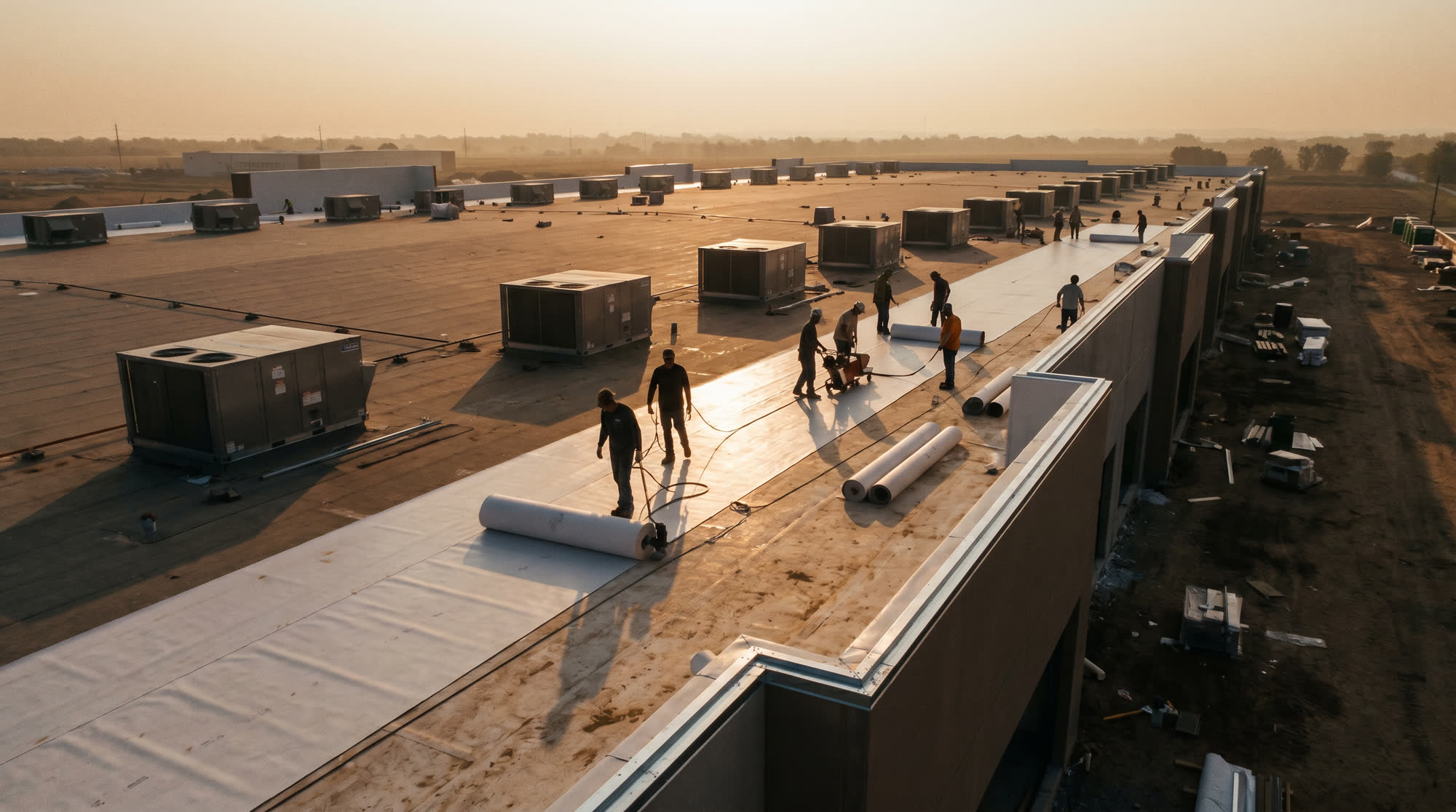
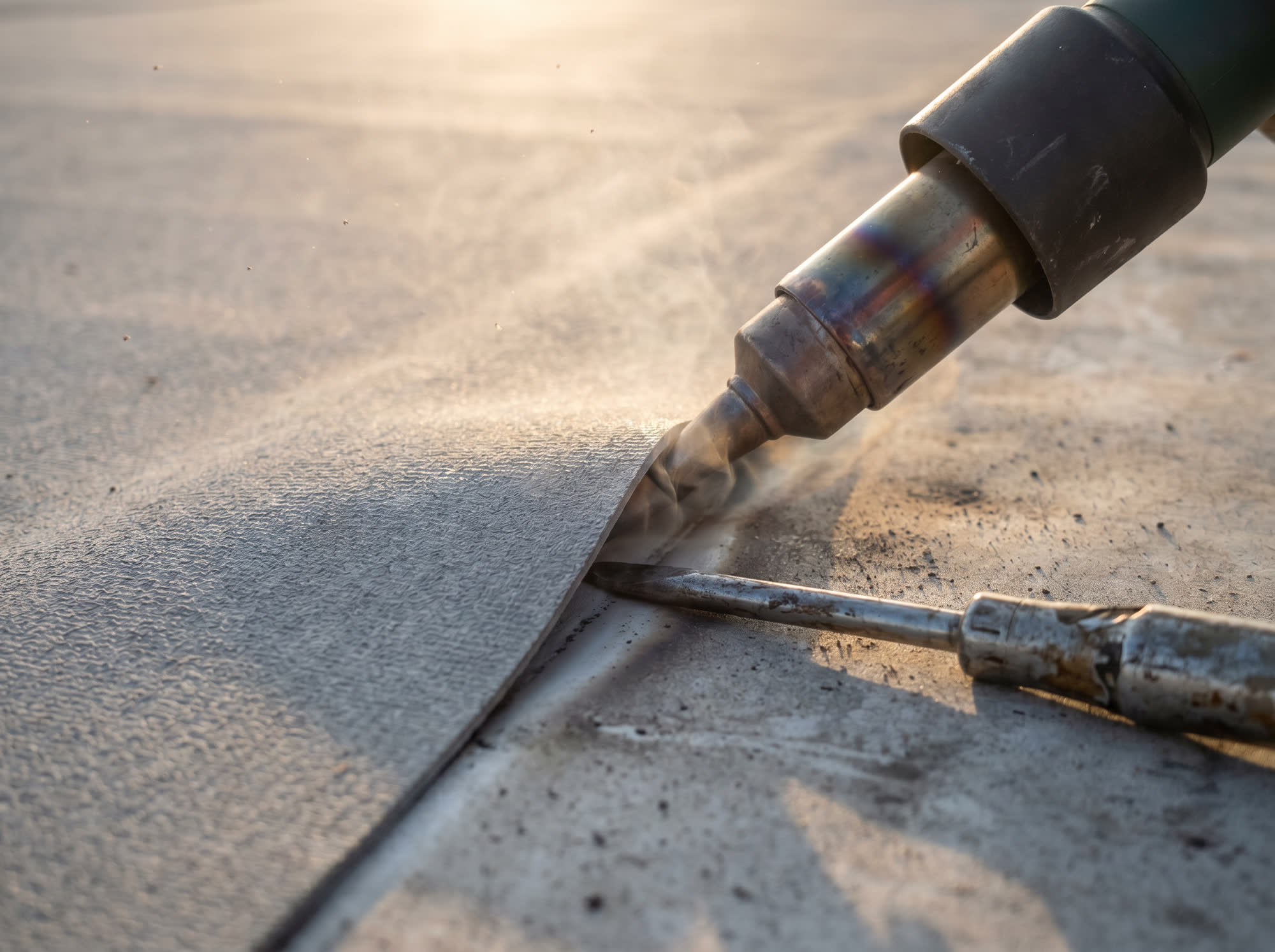
Field · TPO InstallN 41° 35' W 87° 20'
01 — Practice
Commercial roofing education
Answers that help you ask better questions.
A good commercial roofing decision starts before the estimate. It starts with understanding the roof you have, the system being proposed, the condition of the deck, the moisture risk, the drainage plan, and the scope details that separate a real solution from a cheap number.
This site explains those decisions in plain English. I think about commercial roofs as systems — deck, insulation, cover board, membrane, flashings, terminations, drainage, and the maintenance plan that keeps it warrantable. When owners understand how those layers behave together, the conversation gets clearer fast.
If you are ready to move from learning to action, North Star Roofing Systems LLC can help review the building, talk through the options, and build a scope you can understand before you sign.
/ 01
Roof system basics
Membrane, insulation, cover board, fasteners, flashings, edge metal, drains, and walk pads explained in terms a building owner can use.
/ 02
System selection
TPO, EPDM, modified bitumen, metal, and recover vs. tear-off decisions matched to building use, deck, code, and warranty length.
/ 03
Scopes & exclusions
What to look for in a proposal: system type, manufacturer warranty, flashing details, substrate assumptions, and what is not included.
/ 04
Budget & timing
Why prices move, how lead times affect scheduling, and why weather windows matter on commercial and residential roof projects.
/ 05
Inspections & reports
Roof walks, core cuts, drainage checks, and photo-documented condition reports that help justify the recommendation.
/ 06
Owner-side translation
Plain-English summaries for property managers and owners who need to understand the roofing decision, not just sign a bid.
02 — Field Notes
Roofing education & resources
Plain-spoken articles for owners, PMs, and crews.
A small learning library for the questions that come up before a roofing project: what system to choose, when to recover, when to tear off, and how to compare scopes without getting buried in jargon.
Systems·9 min read
TPO vs. EPDM in the Midwest: how I actually pick a system.
Both are workhorse single-ply membranes. The real question isn't which is "better" — it's which behaves better on your deck, in your climate, under your maintenance plan. A walk-through of how I weigh the trade-offs on Indiana and Chicago-area projects.
Read the field note
For owners·6 min read
How to actually read a roof condition report.
What the photos mean, why core samples matter, and the three sentences that tell you whether you're looking at a recover candidate or a tear-off.
Read the field note
Decisions·7 min read
Recover or tear-off? The five questions that decide it.
Most owners ask about price first. The answer is usually hiding in moisture content, deck condition, code triggers, warranty needs, and how long you plan to hold the building.
Read the field note
Scoping·5 min read
What a good commercial roofing scope actually says.
If three roofers send three bids that "look the same," the scopes are doing a bad job. Here's the short list of things every line item should make explicit.
Read the field note
Detailing·8 min read
Why “flat” roofs aren't flat — and why drainage is half the job.
Tapered insulation, crickets, scupper sizing, secondary drainage. The unglamorous geometry that decides whether a roof leaks at year three or year twenty.
Read the field note
03 — Notebook
Business & project lessons
A few things the work has taught me.
Notes I'd pin above my desk. Some are about roofing. Most are about how to run a project, a crew, and a small company without burning out the people doing the work.
/ 01
Walk the roof before you price it.
Spec sheets and Google Earth lie. Drains lie too. Standing water, soft spots, parapet condition, deck movement — these are signal that change a number by a lot. Boots on the membrane is cheap insurance.
/ 02
The scope is the contract.
Owners don't argue over the part of the roof you described clearly. They argue over the part you skipped. A boring, exhaustive scope prevents 80% of the change-order conversations that go sideways.
/ 03
Crews remember how you treat them at 5 p.m. on Friday.
How a project closes — paid, debriefed, restocked — sets the tone for the next one. Estimating is upstream of culture; if the bid was honest, the close goes easy.
/ 04
Beware the 8% bid.
If a competitor's price is 8% lower, it's probably an apples-to-apples mistake on someone's takeoff. If it's 25% lower, somebody is missing scope, missing flashings, missing warranty, or banking on a change order to make it whole. Know which one you are.
/ 05
Document the condition you found, in writing.
Before-photos with timestamps protect everybody — owner, GC, roofer. They're also the cheapest education tool a junior estimator can build.
/ 06
Reputation compounds quietly.
Most commercial roofing work comes back through people you treated fairly years ago. Property managers move buildings. Owners build a second one. Architects switch firms. Honest work is a long game; that's the point.
04 — About Paul
Chicagoland roots, old-school roofing education
A career built by necessity, work ethic, and paying attention.
My name is Paul Cadena. I grew up in Downers Grove, in the Chicagoland area, and got pulled into roofing as a senior in high school through a friend who owned a successful mom-and-pop roofing business. Like a lot of people in the trades, I did not sit down with a career counselor and pick roofing from a brochure. I fell into it, then found out fast that hard work and dedication could pay off if you were willing to learn.
For me, it also came from necessity. I was on my own early and had a family at a young age, so there was no long debate about what I felt like doing. It was simple: do what you have to do. The choice I made was to take the work seriously, become the best I could, and understand the different parts of the roofing industry instead of staying only where I started.
That meant learning the hard way from men who came up the same way. Nobody coddled you. Respect and knowledge were passed down after you proved you would show up, work hard, pay attention, and take initiative. Moving beyond laborer meant taking responsibility before someone handed you a title.
05 — Business Development
Understanding your client
Same roof. Different client. Different approach.
Not every client or partner values the same thing in the roofing company they do business with. Understanding those nuances changes the conversation and often tells you whether the relationship is the right fit.
/ 01
Property managers
Usually need communication, documentation, budget clarity, and a contractor who does not create surprises for tenants, owners, or asset managers.
/ 02
Building owners
Often care about long-term value, risk, warranty, useful life, and whether the recommended system makes sense for how long they plan to hold the property.
/ 03
General contractors
Need a clear scope, dependable schedule, submittals, coordination, and a roofing partner who understands how one missed detail can affect the whole project.
/ 04
Facility teams
Value practical answers, access planning, maintenance realities, leak history, and a contractor who respects what their people already know about the building.
The product may be the same membrane, coating, metal, or repair detail, but the approach should not be identical for every client. Good business development means listening for what the client values, tailoring the explanation to fit that priority, and being honest enough to know when the project or relationship is not the right match.
06 — Off the Roof
The ride
Two wheels, flat horizon, no email.
Outside of work, most of my best thinking happens on my black 2021 Street Glide. There's a particular kind of stillness on a midwestern two-lane at sunset — corn on both sides, an open sky, no notifications — that you can't get any other way.
I ride for the same reason I like commercial roofing: it's honest. The road tells you the truth about the bike. The bike tells you the truth about how you're paying attention. There's no faking it, and there's no shortcut. A long ride is a kind of audit on yourself.
A few hundred miles out and back through Indiana farm country, a stop for coffee, a slow walk around the bike. I come home with a quieter head and, usually, an idea I needed.
“The roof, the road, and the run of a small business all reward the same thing — paying attention to the boring stuff long enough that nothing breaks.”
07 — Contact
Ready for the next step?
Make an informed decision. Then contact North Star.
This site is here to help you understand the roofing decision before the sales conversation starts. When the basics make sense and you're ready to look at your actual building, North Star Roofing Systems LLC is the next step.
Tell us what kind of roof you have, what problem you're seeing, and what decision you're trying to make. We can help review the condition, explain the options, and build a clear scope so you know what you are buying.