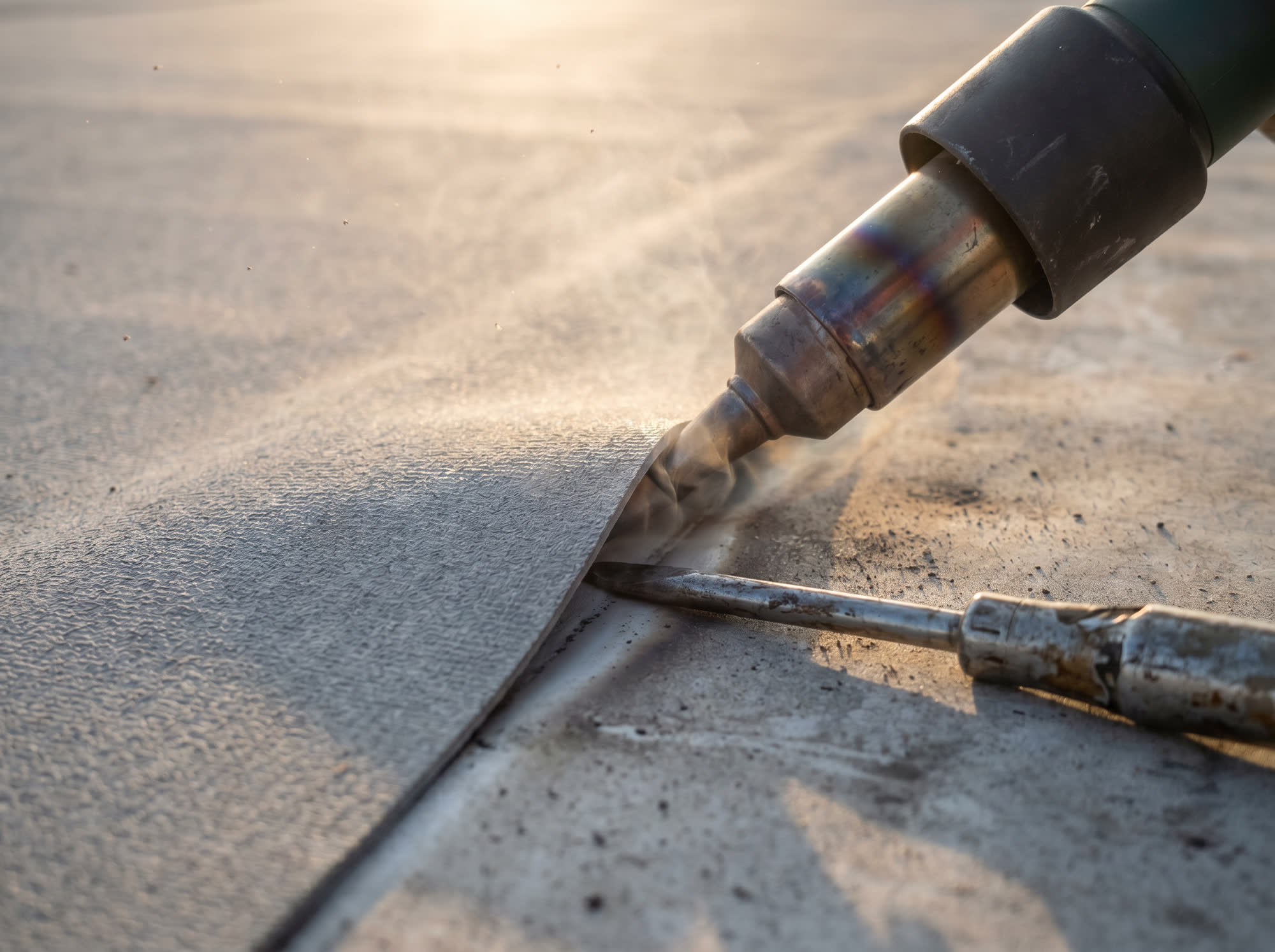
TPO and EPDM are both common low-slope roofing membranes. TPO is usually white, heat-welded at the seams, and often chosen for reflective performance. EPDM is a black rubber membrane with a long track record, especially on commercial buildings that need flexibility and proven durability.
The mistake is treating the choice like a popularity contest. A roof system has to be matched to the building. Deck condition, insulation needs, rooftop traffic, drainage, existing roof layers, warranty goals, and how long the owner plans to keep the building all matter.
Where TPO often makes sense
TPO can be a strong option when reflectivity matters, seams need to be welded, and the building owner wants a clean single-ply system with broad manufacturer support. It is common on retail, industrial, and warehouse roofs across the Midwest.
Where EPDM still earns respect
EPDM has been around for decades for a reason. It handles movement well, performs in cold weather, and has a reputation that comes from years of field use. On the right building, it is still a very serious option.
The decision is not just membrane
- Insulation: R-value, slope, and fastening patterns can change the whole system.
- Drainage: A good membrane cannot save a roof that holds water in the wrong places.
- Details: Edges, penetrations, curbs, walls, and drains are where many roofs win or lose.
- Maintenance: The best system is still a bad investment if nobody plans to maintain it.